

Optical Contact
01
Technology
Optical Contact
Optical contact, which is also called as direct fusion bonding or adhesive free contact, is the core technology of Japan Cell.
The molecule within amorphous glass is in stable condition that the molecule attract each other with a force. However, the molecule on the surface of precision polished glass is in unstable condition as the molecule on glass surface lose attracting force.
When two precision polished glass of the molecule of unstable condition are contacted, the molecule in contacted glass surface react with each other and shift to stable condition. The process of Optical contact is based on the above bonding theory.
The molecule within amorphous glass is in stable condition that the molecule attract each other with a force. However, the molecule on the surface of precision polished glass is in unstable condition as the molecule on glass surface lose attracting force.
When two precision polished glass of the molecule of unstable condition are contacted, the molecule in contacted glass surface react with each other and shift to stable condition. The process of Optical contact is based on the above bonding theory.
Fetures/Benefits
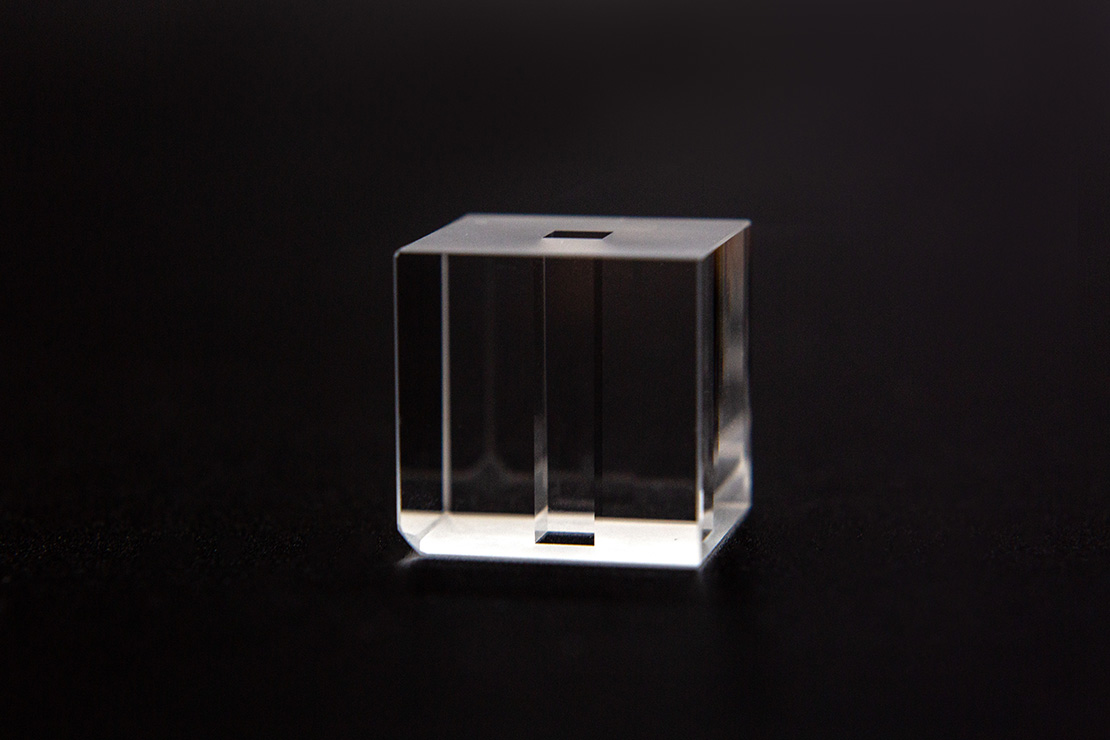
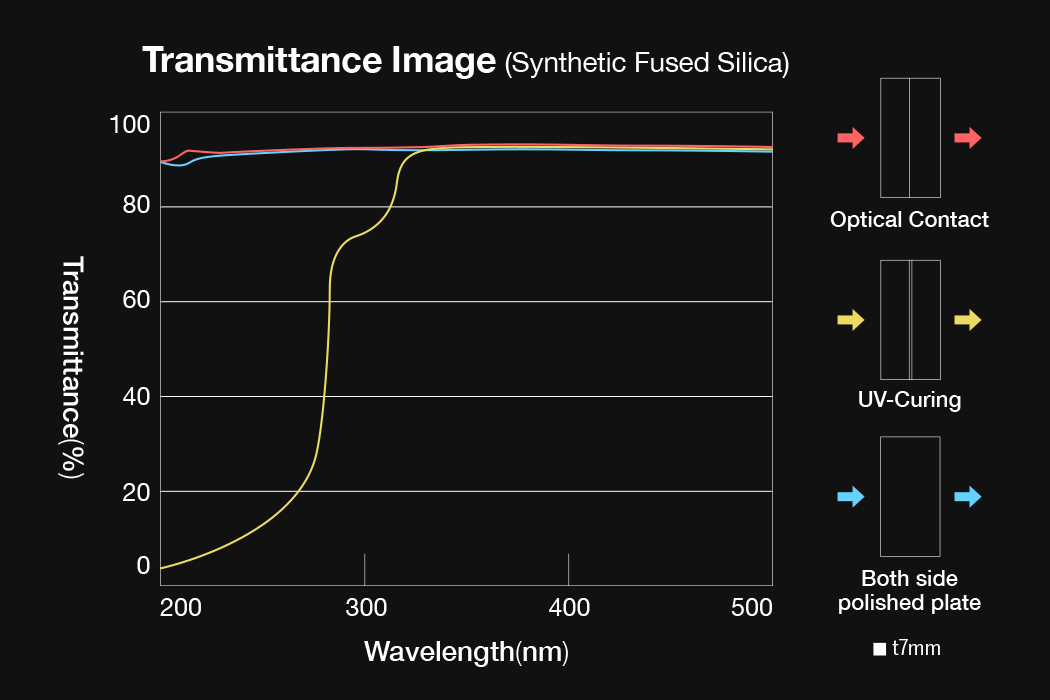


- Optical contact achieve solid bonded surfaces, and no need to worry about elution problem from bonded surfaces because no adhesives are used. The other bonding method like adhesive bonding and glass fritting bonding have each weak point, UV curing and epoxy adhesive does not have chemical and heat resistance, and glass frit bonding does not have good optical quality on the contacting surface. So if the components need to have good surface quality, chemical resistance and heat resistance, Direct fusion bonding is the best method.
Since we don't apply pressure during optical contact process, bonding surface and its inner structure keep good flatness and optical grade quality.
Optical contacted products are widely used for analysis device and optical equipment which use laser.
Optical contact is avalable for flat surfaces only, and we can bond glass materials like synthetic fused silica/tempax and crystal body like sapphire and CaF2.
Optical Contact Work experience (Glass Material)
We have extensive experience with optical contact bonding using a wide range of glass materials for research optics, analytical instruments, and semiconductor manufacturing equipment components.
Below are some representative glass materials for which we have achieved optical contact bonding (please contact us regarding materials not listed here).
Below are some representative glass materials for which we have achieved optical contact bonding (please contact us regarding materials not listed here).
| Category | Material | Typical Features & Applications |
|---|---|---|
| High transmittance High heat resistance High purity Low thermal expansion |
Fused silica Quartz glass |
Optical windows and laser optical components that require high transmittance from UV to visible to IR wavelengths and excellent heat resistance. We can handle a wide range of materials from synthetic fused silica and quartz glass to black fused silica with superior light-shielding properties. |
| Broadband transmission Thermal conductivity High hardness High environmental resistance |
Sapphire | Observation window, protective window, and optical components used in harsh environments where high hardness and excellent abrasion resistance are required. We can also work with other crystalline materials such as calcium fluoride (CaF₂). |
| General optics and instrumentation use | Borosilicate glass | General optical components, and cells/windows for analytical instruments. |
| For electronics and semiconductor applications | Alkali-free glass | Components for semiconductor manufacturing equipment, and substrates/windows for electronic devices. |
| Others | Various optical glasses | We have experience with various optical glasses according to your specific requirements. Please contact us for further details. |
Optical contact bonding may also be possible for materials not listed above, depending on the conditions. Please feel free to contact us via the inquiry form with your drawings and/or specifications.